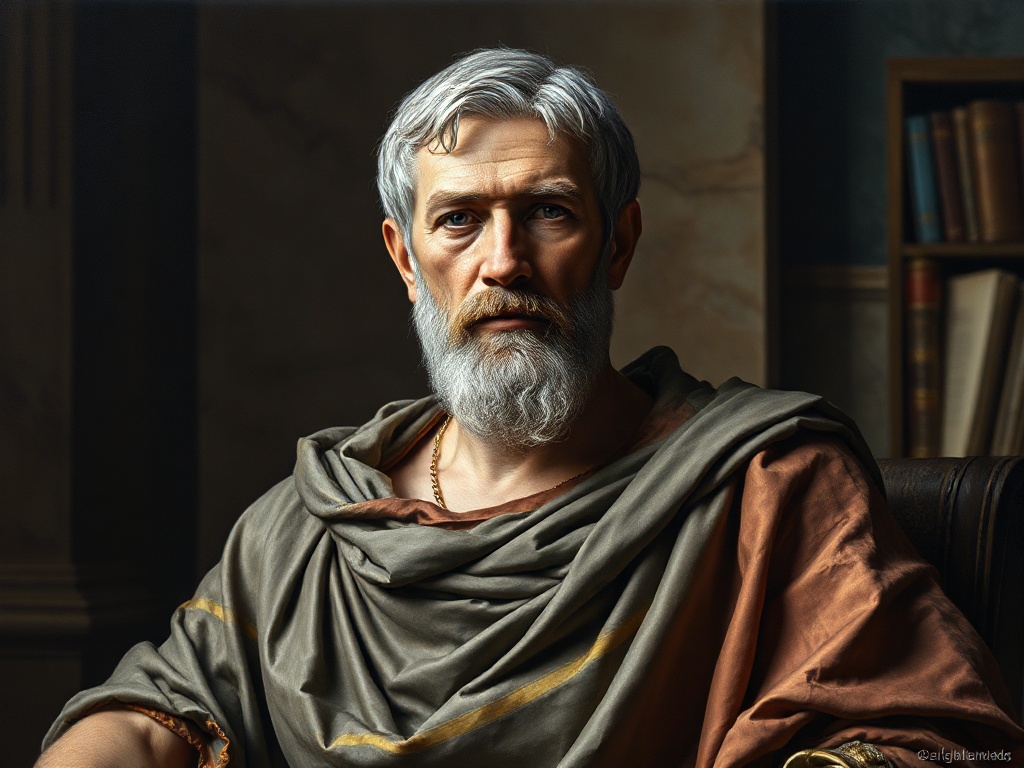
Seneca (4 BC–65 AD)
Lucius Annaeus Seneca was one of the most influential Roman Stoics and writers of his time. He came from a wealthy family in Córdoba (Hispania) and experienced a brilliant yet perilous career in Rome.
Seneca first served under Emperor Claudius as quaestor and later as tutor to the young Nero. Under Nero's rule he became one of the emperor's most influential advisors and, at the same time, one of the wealthiest men in Rome. Paradoxically, Seneca used this position of power and wealth to devote himself publicly to Stoic philosophy — a tension that defines both his life and his work.
Seneca's contribution to Stoic philosophy lies less in original theoretical innovation than in the masterful, accessible presentation of Stoic principles. His Epistulae Morales ad Lucilium (Moral Letters to Lucilius), a collection of 124 letters to his younger friend Lucilius, form a practical handbook of ethics. In them he addresses themes such as overcoming fear, grief, anger, and discontent — all from the Stoic perspective that true happiness depends on inner virtue, not on external circumstances.
In addition, Seneca wrote philosophical dialogues (Dialogi) and treatises such as De Ira (On Anger) and De Clementia (On Mercy), in which he applies Stoic virtues to concrete human problems. His tragedies, though classically structured, reflect his philosophical interest in human passions and their control.
Seneca's life ended tragically: Emperor Nero, to whom he had been close in the early years, suspected him of involvement in a conspiracy and compelled him to take his own life. Seneca accepted this command with Stoic equanimity and died in 65 AD.
His legacy is immense: for centuries Seneca's works were the principal source for understanding Stoic ethics in the Western world, and they continue to influence philosophy, literature, and personal ethics to this day.