Pierre Hadot (1922–2010)
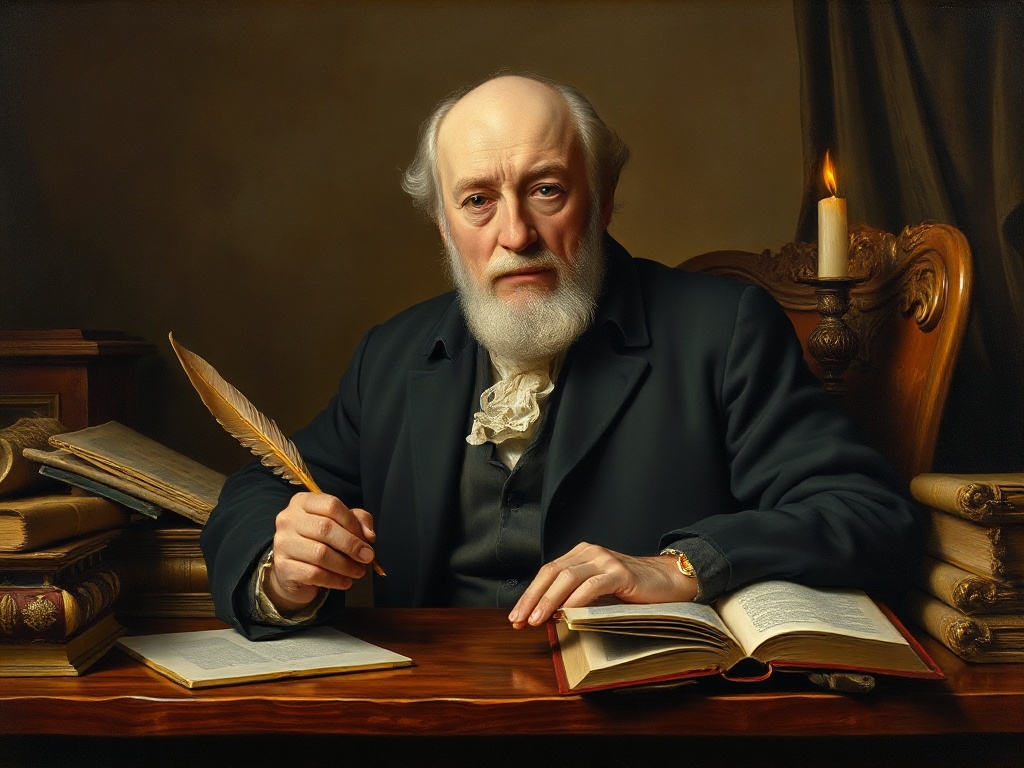
Pierre Hadot was one of the most eminent French historians of philosophy of the 20th century, whose work fundamentally renewed the understanding of ancient philosophy – and of Stoicism in particular. Born on 15 February 1922 in Paris, he first studied theology and philosophy before devoting himself entirely to the history of ancient thought. In 1982 he was appointed to the prestigious Chair for the History of Hellenistic and Roman Thought at the Collège de France, where he taught until his retirement. He died on 24 April 2010 in Orsay.
Philosophy as a Way of Life
Hadot's central and most influential work is Philosophy as a Way of Life (Exercices spirituels et philosophie antique, 1981). In it he develops the thesis that ancient philosophy – and Stoicism in particular – was never mere abstract theory, but always a lived practice: a concrete path of self-transformation. In this context he coined the term "spiritual exercises" (exercices spirituels), by which he described techniques such as meditation, self-examination, memento mori contemplations, and the practice of the present moment, which Stoic philosophers systematically cultivated.
Prosoche – the Art of Self-Attention
Hadot devoted particular attention to the Stoic concept of prosoche (Greek προσοχή), the "attention to oneself". He analysed this concept as the fundamental disposition of ancient philosophy as a whole: the constant, vigilant return of the mind to itself, the concentration on the present moment, and the continuous governance of one's own judgements and impulses. Drawing on texts by Marcus Aurelius, Epictetus, and Seneca, he demonstrated how prosoche became the root of ethical self-discipline and inner freedom.
Contribution to Stoic Scholarship
Hadot played a decisive role in re-reading Marcus Aurelius's Meditations (Ta eis heauton) – not as a literary work, but as a philosophical exercise journal composed anew each day in the form of spiritual exercises. His interpretations inspired an entire generation of scholars and contributed substantially to the modern reception of Stoicism, including in the popular Modern Stoicism movement.
Influence and Legacy
Hadot's thought united scholarship with existential seriousness: he saw in ancient philosophy a timeless invitation to lead life more consciously, more freely, and more virtuously. His student Michel Foucault adopted many of his ideas on the care of the self (epimeleia heautou). To this day, Pierre Hadot remains an indispensable reference for anyone who wishes to understand Stoicism not merely as a historical phenomenon, but as a living practice.